Equality, the Name for a Considerate Mind: Introduction

Translated from the Korean by Anastasia Traynin
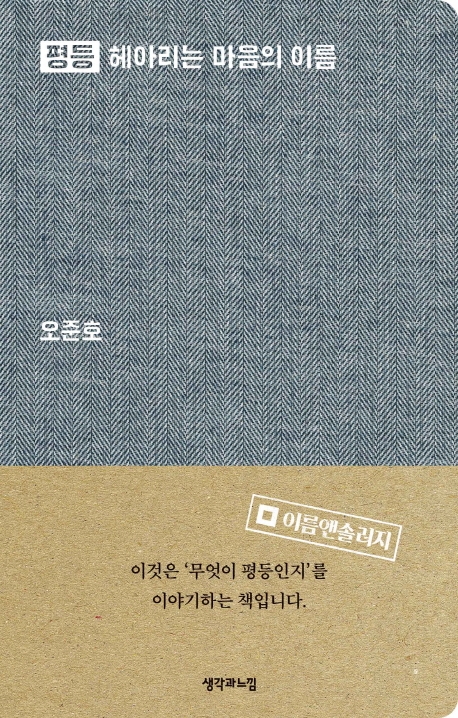
In August 2021, shortly after finishing graduate school, I happened to come across a call for translations for K-Book Translation Contest, a new contest put on by the 한국출판문화산업진흥원 (Publication Industry Promotion Agency of Korea). They had selected five books in five different categories (Literature, Humanities, Philosophy, Social Sciences, Youth). Contestants were instructed to choose one of the books and translate the first chapter (or introduction, in some cases) into one of four languages: English, Chinese, Spanish, Vietnamese. Since my specialty is social issues, naturally I chose the Social Sciences category, for which the selected book was 오준호 (Oh Jun-ho)’s 평등, 헤아리는 마음의 이름 (translated by me as Equality, the Name for a Considerate Mind). My translation of the introductory chapter of this book tied for second place with another translation of the same work, with the results announced in November, just after author Oh Jun-ho had begun his 2022 presidential campaign as a candidate of the 기본소득당 (Basic Income Party). In addition, the fight to pass an anti-discrimination law promoting equality for all Korean residents continues with no resolution and an ongoing campaign in 2022.

As of now, the translations have not been published on other platform and we have not received feedback beyond our prizes. Below is my translation in its submitted form. Any suggestions, corrections, general comments or inquiries are welcome.
********

Equality, the Name for a Considerate Mind

Part 1: Asking the Meaning of Equality in the Age of the Misery Olympics

Story One.

  “We are all equal. Therefore, no one should be given special treatment.”       

   This is the experience of a physically disabled university student who used a wheelchair. When registering for classes, this disabled student carefully checked whether or not the lecture hall had stairs, in order to avoid one that would be difficult to access with a wheelchair. Since the course registration guide had indicated a lecture hall without stairs, the student registered and went to class on the first day only to find a lecture hall with stairs. The course registration guide had been wrong. With the help of friends, the disabled student was able to enter the lecture hall, but as a result missed the first 20 minutes of class.

   The student asked the administration office if the classroom could be changed to one without stairs, but was told that classroom assignments were completed and could not be changed. Feeling sorry, the professor proposed to the student, “After every class, I’ll give you a separate session to make up the first 20 minutes.” Non-disabled students who heard this came forward in protest. Claiming unfairness, they demanded to know why the make-up class was only for the disabled student. With everyone competing for good grades, why was the disabled student getting special treatment? In viral social media posts, some of the class members even labeled the disabled student a “nuisance.” In the end, the disabled student dropped the class.

   Hearing this story brought to mind a saying by the 19th century writer Anatole France: “The law, in its majestic equality, forbids the rich as well as the poor to sleep under bridges, to beg in the streets, and to steal bread.” To sleep under a bridge means to be homeless, such as the homeless people at Seoul Station. A law forbidding the rich as well as the poor to be homeless may seem equal, but is that really the case? Would a rich person ever sleep under a bridge in the first place?

   Samsung Electronics Vice Chairman Lee Jae-yong homeless at Seoul Station is as unimaginable as a rich person sleeping under a bridge. Those who sleep there are poor people unable to find livable housing, left with no choice but to lay down under a bridge. The law gives priority to measures of urban aesthetics that effectively only punish the poor and drive them out of the city. Of course, streets from where the poor have disappeared look more comfortable and safe for the rich. In this way, when the law’s standard is biased towards one side, it may appear fair and impartial from the outside while actually oppressing one side and protecting the privilege of the other. Anatole France satirizes the fact that the law claims to be fair but is actually serving the interests of the rich.
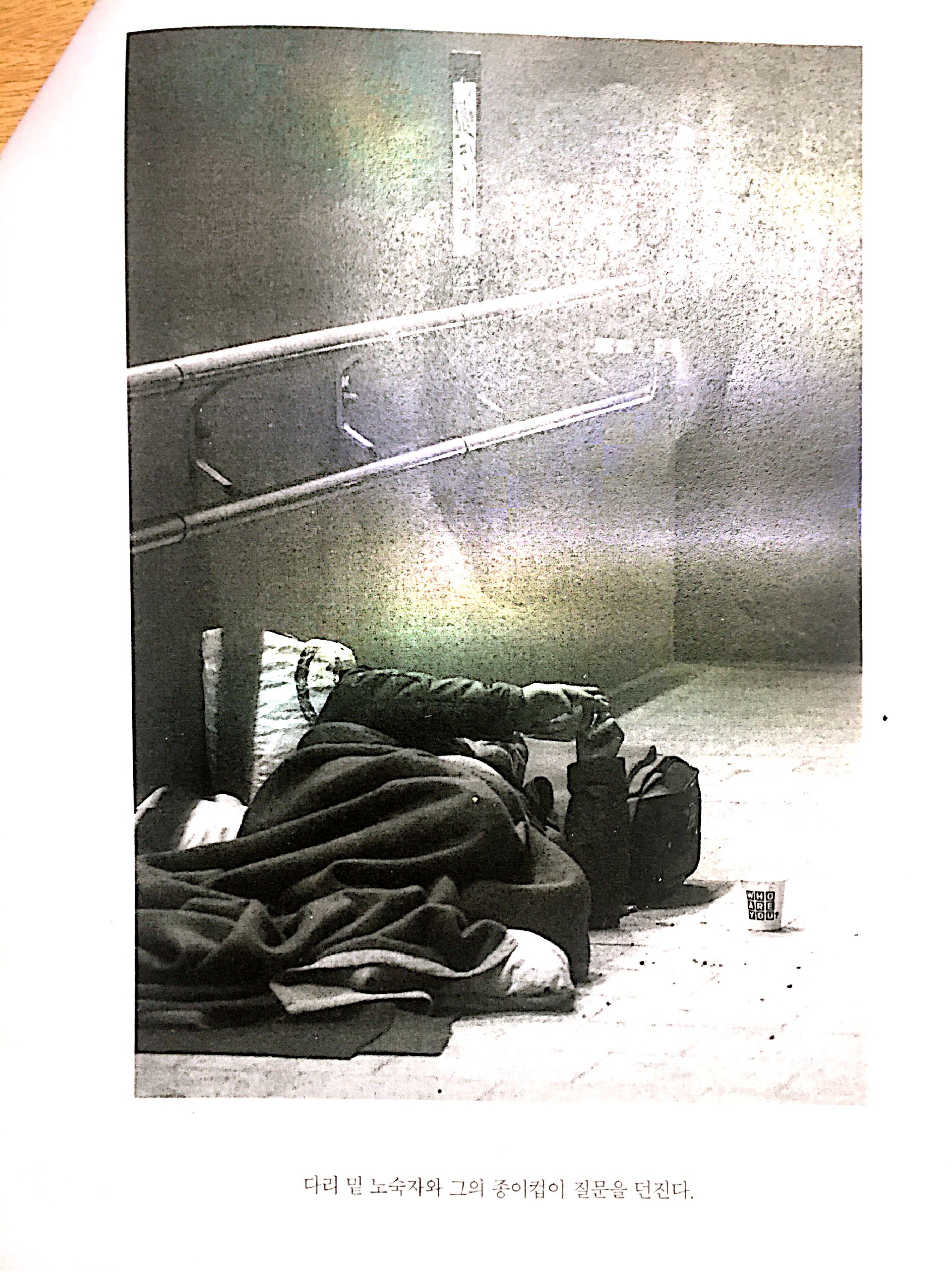
pg. 10 Photo Caption: [A homeless person under a bridge with a paper cup that poses a question] 

   The non-disabled students’ position does not seem to come from an arrogant belief that the non-disabled are superior to the disabled. Rather, their attitude presupposes that “We are all equal.” It comes from the idea that since everyone has to get good grades to squeeze through the narrow door of employment, all are in the same boat and standing at the same starting line in the grades race. So the non-disabled students get angry and claim unfairness, demanding to know why anyone should get special consideration under mutually equal circumstances. But they are missing one thing: though they may be unaware, the fact is that they have “privilege.”

   The non-disabled students may think, “But how could I, a regular person, possibly have any privilege?” Their lack of a disability is a daily privilege, one that allows them to come and go from a lecture hall with stairs without any difficulty. For a disabled student, just coming and going from a lecture hall with stairs takes a big physical and mental toll. Under the premise of all being equal, the non-disabled students say that disabled students shouldn’t be given any “special treatment.” Yet without even realizing it, they enjoy non-disabled privilege; they are the ones angry over the fact that they won’t share this privilege with disabled students.

   Equality is an important value, but there are countless different answers to the question “What makes something equal?” Treating the same things as the same and things that are not the same differently is what we call “fairness.” In that case, asking “What makes something equal?” must also be asking what makes it fair. If we provide equal opportunities and apply the rules equally, does this make the world fair enough? Or is there something else needed? This is the theme discussed in this book.

   Story Two.

   “Inequality is a problem. However, there should be a bigger difference in rewards based on ability.” 

   While giving a lecture to a group of teenagers, I asked, “Do you think inequality and polarization are serious problems in Korea?” Among the 20 teenagers listening to the lecture, around 17 or 18 answered “yes.” I followed up with the question, “Do you think there should be bigger rewards based on ability and effort?” This time, out of the 20 people, 100% answered “yes.” The teenagers mostly empathized with the so-called “golden spoon, dirt spoon” reality of inequality as a serious problem. On the other hand, they almost unanimously agreed with the idea that bigger rewards should be based on ability and effort.

   This response was rather interesting, as the teenagers’ two answers seemed to contradict one another. The idea that there should be a big difference in rewards based on ability and effort is called “meritocracy.” If one supports meritocracy, then it makes sense to consider income inequality as an inevitable result, since performance will also differ according to each person’s different abilities. When I asked the same questions at another lecture for teenagers, the same somewhat contradictory responses emerged. However, when you think about it, even while supporting meritocracy, today’s inequality may still not be seen as the fair result of ability and effort.

   Today’s teenagers have had a sense of inequality since childhood. In one family, when a child has a birthday, the parents invite their child’s friends to a birthday party at a high-class buffet. In another family, both parents work long hours and can hardly even provide a good meal, so the children make do with ramen at an internet cafe. In one family, the child has a famous academy lecturer come to their house for expensive private tutoring and goes abroad for language study during school holidays. In another family, the child goes to a local supplementary academy and has to earn their spending money working a part-time job during the holidays. The gap between these experiences is borne out by the numbers. The top 10% of society hold 50% of the total national income and account for 70% of the real estate and 80% of the interest and stock dividends. 

On the other hand, among 18 million working people, 9 million earn an average of less than 2 million won per month. Among the self-employed, 70%, or 3.5 million people also barely earn 2 million won per month. This means that half of Korea’s economically active population gets by on less than 2 million won per month.

   Yet even while experiencing inequality, meritocracy dictates that this kind of unequal reality can only be overcome by the individual. If you improve your ability and make far more of an effort, you can expect to be able to climb at least a little higher up the ladder in this stratified society. Society tells some of us, “You lagging behind is due to your lack of effort and ability,” while claiming that people who occupy high places got there thanks to their own ability and effort and are therefore qualified for their current wealth and status. Is this a true statement? Can each person really overcome this reality through their own ability and effort? Did people of wealth and status come to occupy their place through ability and effort alone?

   Story Three.

   “Competition is absolutely necessary. Even if competition makes me miserable.”

  Looking at the public opinion poll on the right, 79% of respondents answered that competition helps to increase productivity. Yet 62% of respondents in the same poll think that the side effects of competition are serious. Only 8% answered that they are not serious. People accept the value of competition, while at the same time have a hard time because of it. Among all respondents, the total number that agreed with the statement “Competition lowers quality of life” was 45%, just under half. However, among respondents in their 20s, 58% agreed with this statement. It makes sense that the younger the generation, the more they feel competition fatigue. When I ask teenagers this question, a similarly contradictory response emerges. “Competition makes life difficult. Still, we can’t get rid of competition, right?”


Are the Side Effects of Competition Serious?

I Don’t Know – 1%

          Not Serious – 8%

          Normal – 29%

          Serious – 62%

          Awareness of Competition’s Influence

          Competition Helps to Increase Productivity in our Society 

          I Don’t Know – 2%

          Disagree – 19%

          Agree – 79%

          Competition Lowers Quality of Life in our Society                                   

          I Don’t Know – 2%

          Disagree – 53%

          Agree – 45%                                                                

          Source: Jeong Han-wool, Lee Gwan-ho, “Report: Survey on Awareness of Fairness in   Korean Society,” Hankook Research, 2018.

        The percentage of people in agreement with the statement “Competition lowers quality of life in our society” was the highest for people in their 20s at 58%, followed by people in their 50s at 53% and people in their 30s at 46%. For people in their 40s and people in their 60s and above, agreement stood at 38% and 34%, respectively.

   In a society where everyone is competing for dear life, it’s hard to see better results than anyone else. Even with quite a lot of achievements, there is nowhere to stand out. To be ahead of the competition, one needs to show results, but if the results are indistinguishable from one another, how can one person stand out? You must claim to be competing in a more unfavorable circumstance than others. You must say that you carried a bigger load and that your running track was far bumpier than the rest. In this way, even if your results are the same as others, it could be said that you have more ability and that you made more of an effort. Comparing hardship becomes a new competition event. It’s called the “Misery Olympics.”

   The Misery Olympics are all the rage in our society. If someone admits, “These days, this or that is giving me a hard time,” no one comforts or encourages them. Instead, they diminish the other person’s suffering and point out how much worse they themselves have it, saying, “That’s nothing. You should see what I’m going through…” Rather than a medium of empathy with others, suffering has become a means of competition and something to put on display. The participants in the Misery Olympics are steadily increasing. Even though this battle takes place among friends or groups with similar circumstances, it is also happening between men and women, as well as between different generations.

   When someone complains, “I failed the test,” the other person responds, “I couldn’t even apply.” When an irregular worker talks about experiencing discrimination, the other person throws back, “Do you know how hard it is to prepare for a job interview?” When women talk about their experience with sexism, men refute with, “Do you know how much we struggle during military service?” When the younger generation talks about “Hell Joseon,” the older generation comes back with, “Do you know about the harsh dictatorship times?” At the Olympic Games, the happy winner and the loser congratulating the winner, joined together with the audience applauding in praise and encouragement makes for a touching scene. But at the end of the Misery Olympics, there is no happy winner, no loser who gains strength from the thought “I’m less unfortunate than that one,” and the people looking on don’t feel any better. It’s just everyone, together, becoming more miserable than before.

   Everyone has a chance to participate in competition and the grand prize is called “equal opportunity.” This is the alpha and the omega of what people know about equality. However, in this society, people are becoming more worn out and unhappy. The winner of the competition seems to be competition itself. This is because the only thing gradually growing stronger is the unwavering faith that competition is necessary and important. Should equality be considered the same as “fair competition,” as though it only refers to equal opportunity? In the long history of humankind, has the reason to fight for equality come down to equally enjoying the freedom to compete until collapsing?

What is the word Confucius taught you to practice for the rest of your life?

   The above three stories show the difficulties that our society faces. When turned on its head, the act of upholding fairness and criticizing “special treatment” can be viewed as seeking to protect one’s own vested interests. Social inequality and polarization are gradually increasing and everyone is full of discontent over no longer getting a fair reward based on their own ability and effort. However, pursuing “meritocracy” leads to a larger wealth gap over time. Furthermore, people believe that competition plays a positive role while at the same time making them more worn out and unhappy. The “Misery Olympics” reveals the paradox catching up with the age of 30,000 dollars GDP per capita.

   While equality is an important value with deep historical roots, it needs to be reinterpreted based on time period and context. The reality we are facing is asking us to find a new path within the above-mentioned contradictory and conflicting situation surrounding equality. To this end, we must reexamine the value of equality and talk to each other. This book was written to outline some necessary questions for this kind of discussion.    

  1. Why is equality an important value?
  2. Are inequality and polarization serious to the point where they can’t be left as they are?
  3. Is inequality based on ability and effort a justifiable gap?
  4. Is it fair to think that ability and effort should determine the size of the reward?
  5. What should free and equal citizens do to achieve fair distribution?
  6. Should we only pursue equal opportunity? Is an equal outcome totally impossible?

   From the following chapter, we will look together for the answers to these kinds of questions. Before that, I will introduce a story that may help those of us exploring equality and fairness. It is from The Analects of Confucius: Wei Ling Gong.

   Confucius’ student Zi Gong asked, “Is there one word which may serve as a rule of practice for all one’s life?” Confucius replied, “Is not reciprocity such a word? What you do not want done to yourself, do not do to others.”

   In this text, the Chinese character “恕”(Shù) literally means “forgiveness.” Here, the meaning of forgiveness is “to fathom” by becoming the same in heart and mind. Confucius considered humans as beings who must live with others, and to do so it is necessary to be considerate of the situations of others. When taking or not taking a certain action towards another, ask yourself, “If I were that person, would I gladly accept the choice that I am about to make?” and only take action when the answer is, “This choice would be acceptable to anyone.” In the Aesop fable “The Fox and the Stork,” if the two animals knew how to fathom and be considerate of the other, the fox wouldn’t serve the stork a meal in a shallow dish and the stork wouldn’t serve the fox a meal in a tall jar.

   In this case, “to fathom” goes beyond the level of etiquette that simply requires not making the other party feel bad. It is a question of establishing a principle of justice. This will be discussed later in the book, but the fact is that the standard for justice doesn’t just appear out of nowhere. Rather, it is a rule agreed upon through a fair process, by equal citizens deciding to equally respect each others’ interests. In particular, the focus of the debate on justice is how to share valuable things among members of society and when it is necessary to allow a difference in distribution. This kind of justice is called “distributive justice.”

   When thinking about distributive justice, or rather fair distribution, the necessary attitude is the above-mentioned forgiveness that means to fathom and consider the other. This attitude means breaking free from only being interested in whether or not my personal interests decreased or the idea that if something is an important value or standard for me, others must also accept it without question. It means thoroughly considering each other’s situations, putting ourselves in others’ shoes, carefully examining the context and situation, and making a judgment without bias towards any particular interest.

   In the spirit of fathoming, let’s navigate the way towards just relationships between equal citizens.

For more information on the K-Book Translation Contest, visit the website (Korean): https://k-booktranscon.kr

For an English-language description of the Basic Income Party in Korea, view and download this PDF: https://basicincome.org/wp-content/uploads/2022/01/Oh-Basic-Income-party-manifesto.pdf

The Anti-Discrimination Law (Equality Act) coalition website (mostly Korean) can be found here: https://equalityact.kr
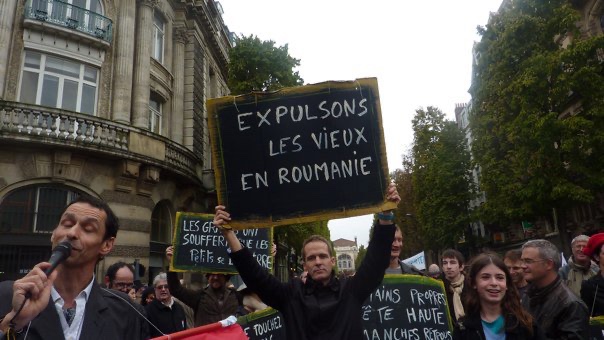
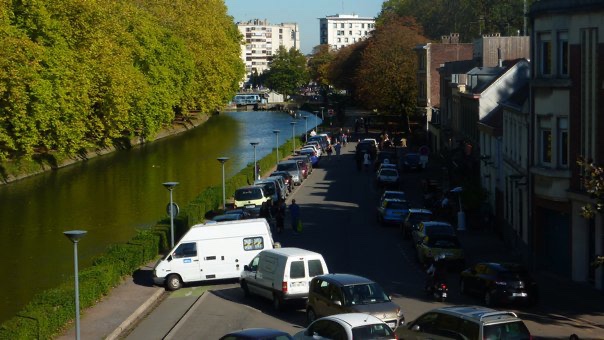
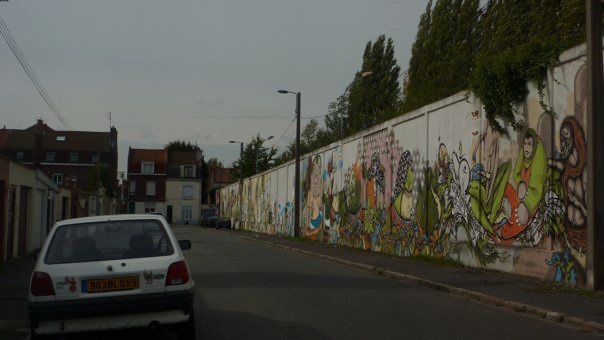
Lille, France Fall 2010

I lost many pictures in a 2018 computer crash so I am starting a project to preserve some memories, outside of the usual social media places.
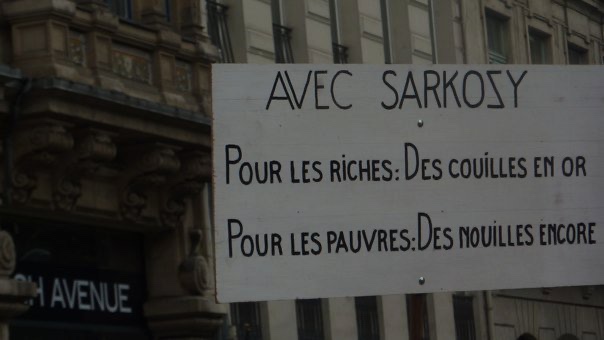
From September 2010 until April 2011, I lived in the medium-size city Lille in Northern France. My house was in the Northeastern working-class neighborhood Fives and I worked as an English teacher at two middle schools in a western suburb called Lomme, as part of the program Teaching Assistant Program in France (TAPIF).

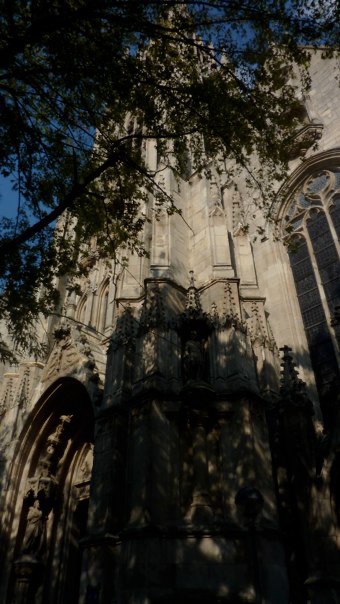
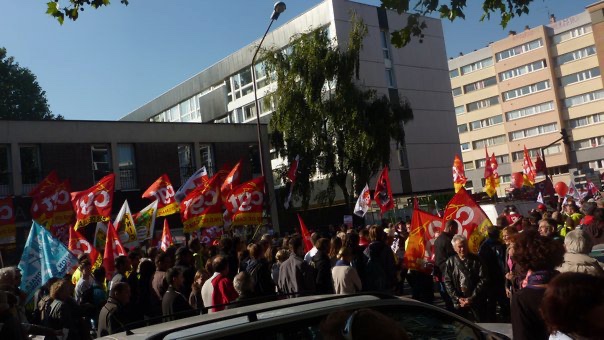
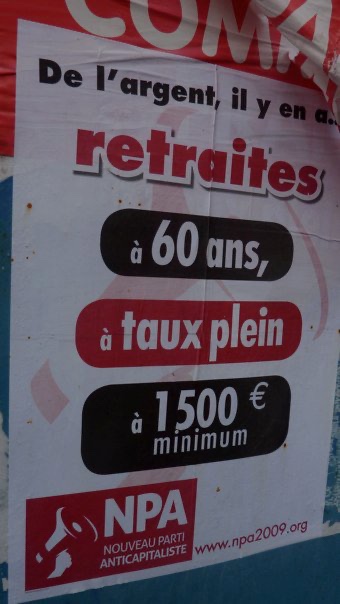
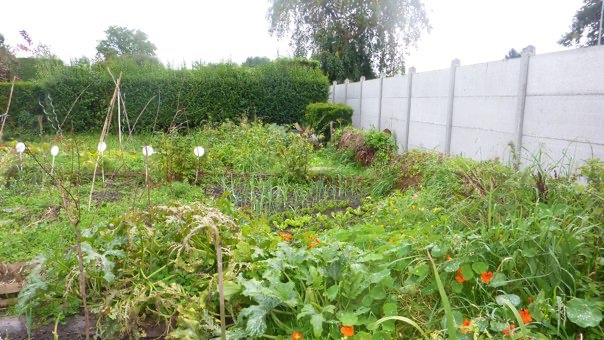
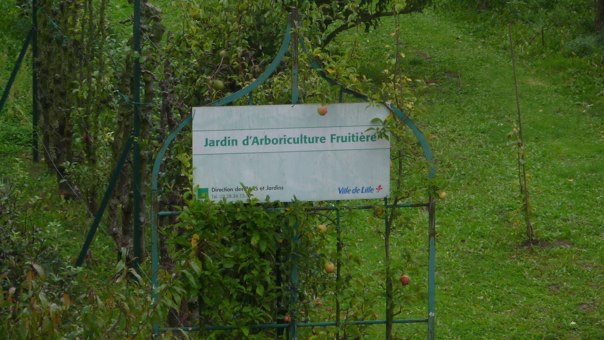
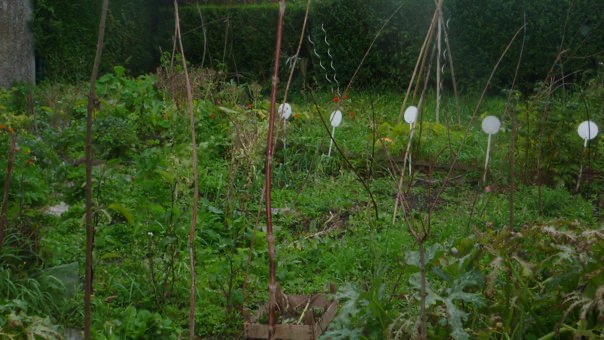
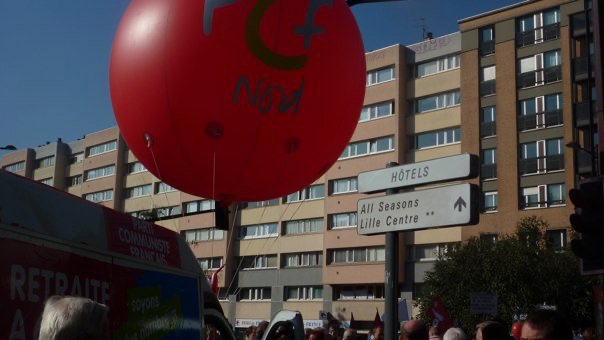
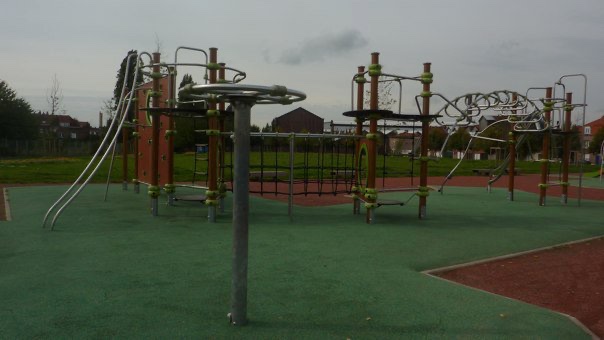
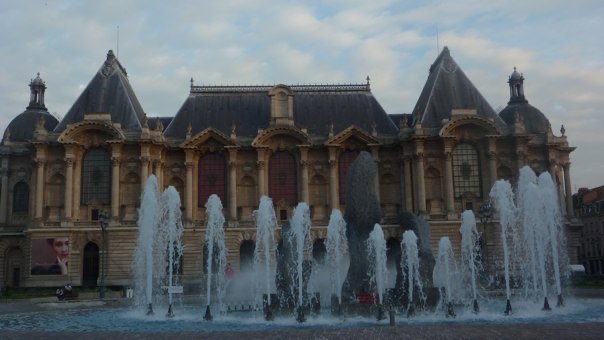
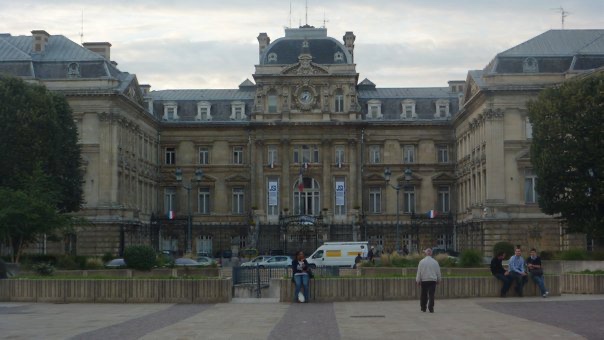
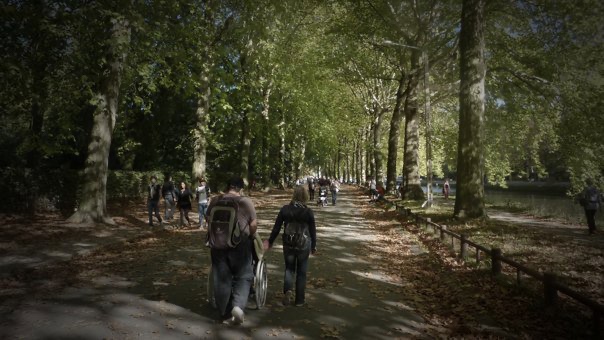
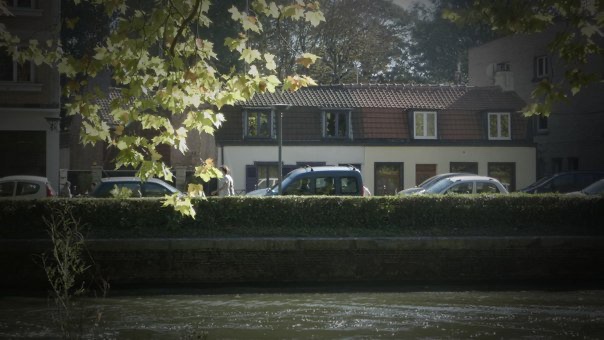
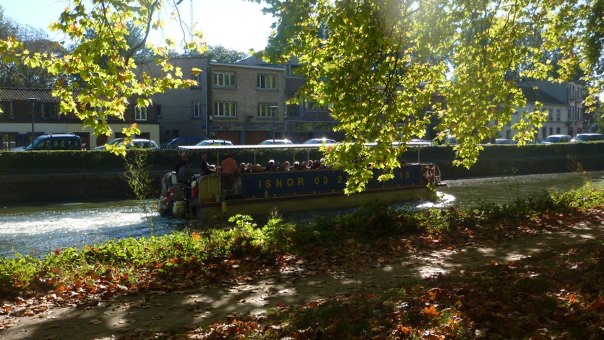
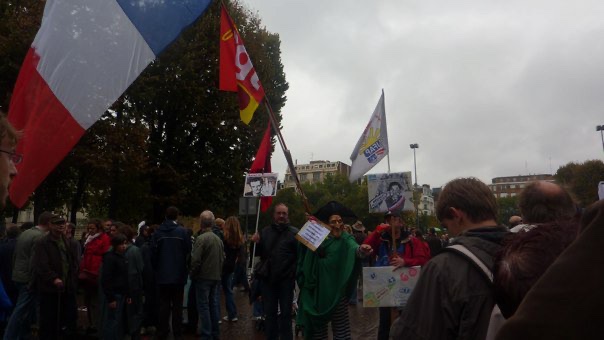
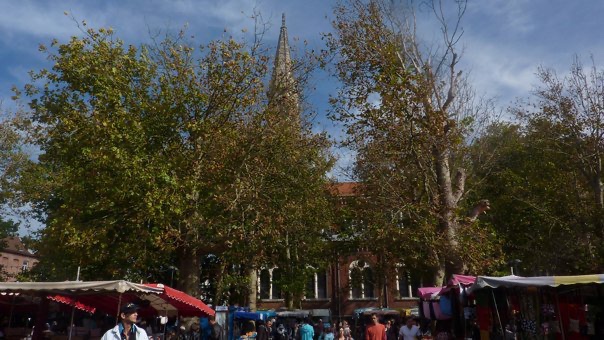
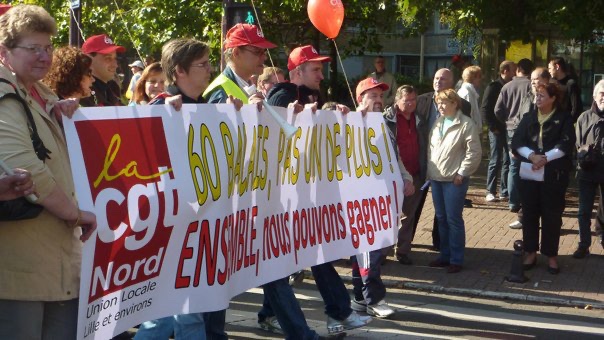
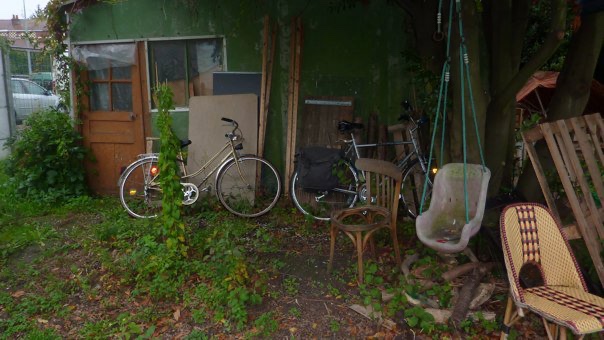
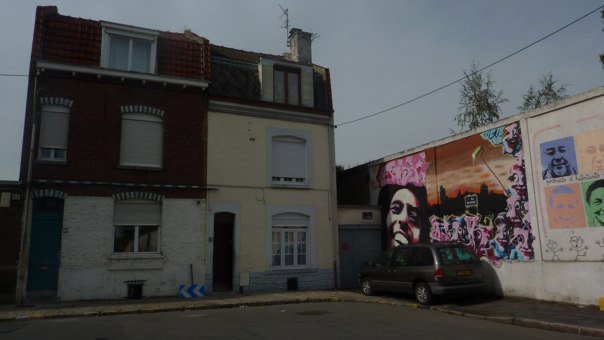
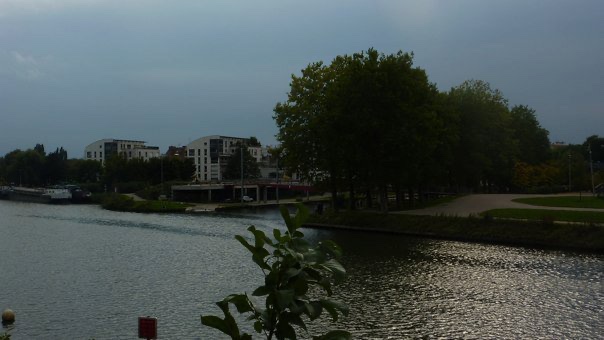
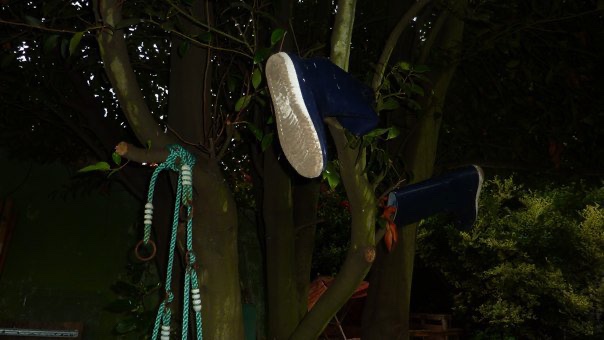
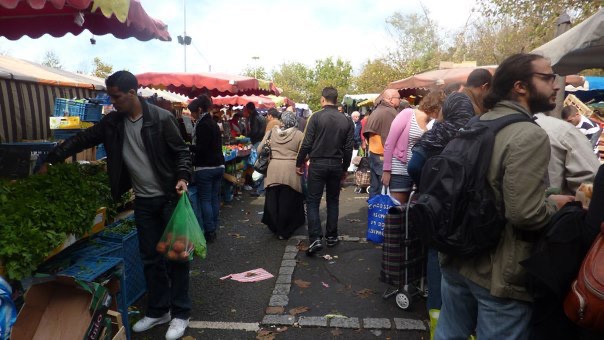
Here are some photos of Lille from Fall 2010. At the time, the nationwide “Mouvement social contre la réforme des retraites en France de 2010 (2010 French pension reform strikes)” had come out in full force, so all the street protest images are related to that. Other photos are from the traditional European downtown Lille, the northern Flemish-style neighborhoods, the Canal de la Deûle that runs through the city, gardening adventures with French friends in a Lille suburb, and sadly just one shot of the lively Marché de Wazemmes (Wazemmes Market), a weekend city staple.

Departure: My Grandfather’s Account of Our Journey as Soviet Jewish Immigrants to the USA

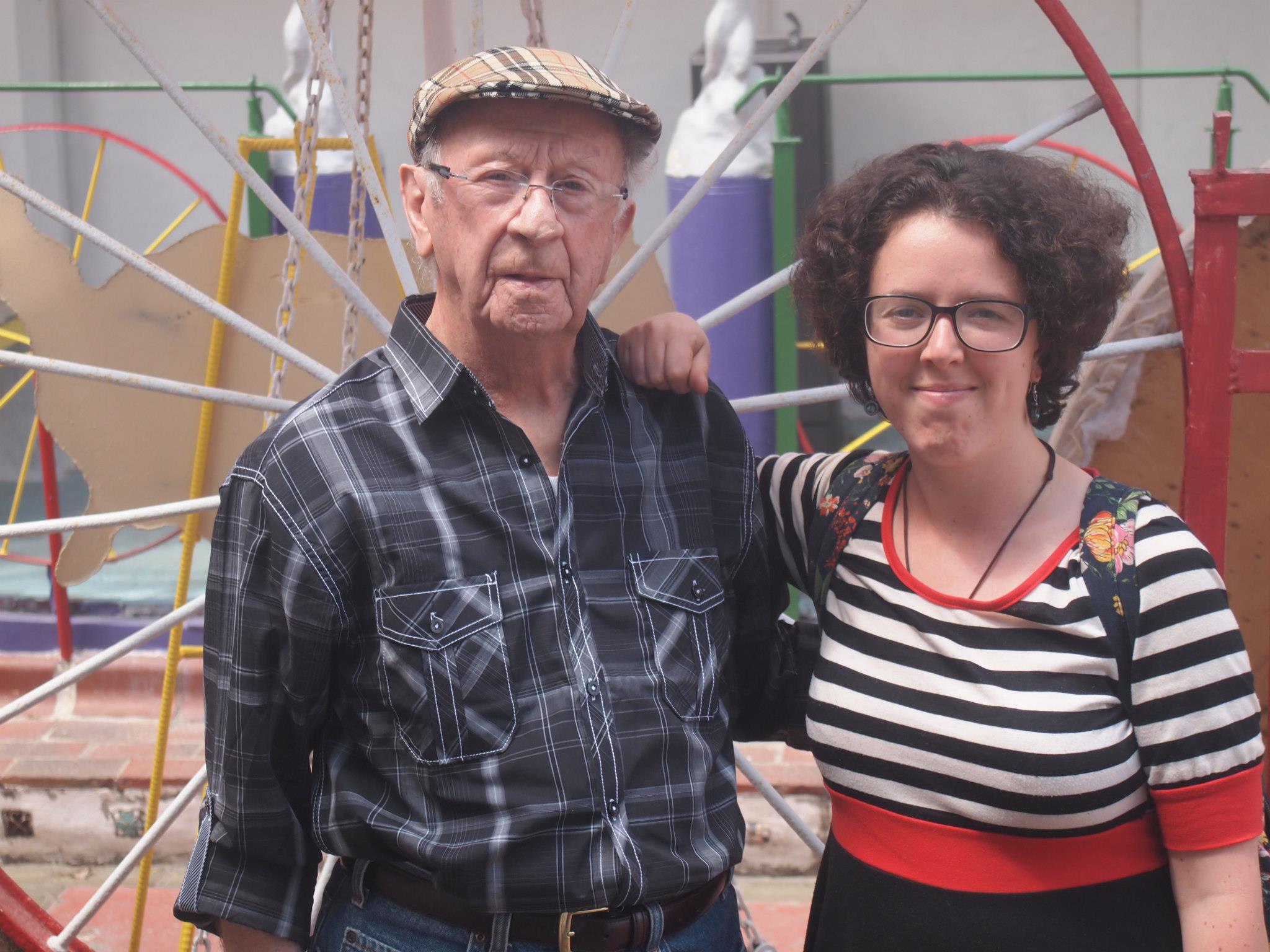
grandpa and I

Written by Lev Fayyershteyn at age 89, December 2016. Deceased: January 2017.

Translated by his granddaughter at age 33, August 2020. Location: South Korea.

Soviet Union Departure Date: May 29, 1991.

Translator’s Note:

My mother’s father Lev Fayyershteyn was born on June 28, 1927 in Tyumen, Russia and had barely joined the army when World War II ended. While in the army, he was persuaded to become a Communist Party member, which over time provided him and our family with more benefits and privileges than most other families. Throughout this story, it is impossible not to notice certain indicators of privilege, such as owning a car and the ability to travel outside of  Russia.  

Despite this, as a Jew, he and others faced lifelong anti-Semitism and discrimination in the Soviet Russian socio-political climate. Intermarrying with ethnic Russians transferred this discrimination to the family, which happened to my grandmothers on both sides. As explained here, Soviet Jews began emigrating in waves from the early 1970s, but it wasn’t until the late 1980s and early 1990s that this demographic really started leaving en masse. Of the 1.6 million Jews that left the Soviet Union between 1989 and 2006, nearly 2/3 went to Israel and around 325,000 went to the United States. Our family was part of this latter group, a very specific American immigrant demographic, formally given refugee status.  

When we left, I was a few weeks away from turning four years old. I grew up in the United States as a bilingual Russian and English speaker, but I was never part of a Russian or Jewish community outside of my own family. My other three grandparents passed away in the United States when I was nine and twelve, but Grandpa Lev outlived everyone and managed to leave this short record of his and our experience. I have the feeling that if he had started writing earlier, or had a bit more time with us, he could have expressed much more. I am grateful for what he did leave and for my ability to read and translate the Russian to English. If we don’t know – of if we learn and then forget – our ancestors’ history, then we can never gain strength from their wisdom.  


DEPARTURE

A Pan Am Moscow-New York flight, specially organized for emigrants from the USSR.[1]

It was calm and cozy inside the plane’s cabin. The pleasant cool air, the faint voices of a few passengers and even the odd cry from one of the many children couldn’t prevent me from drifting off to sleep, which was strange for me, as I was afraid of flying. I was under enormous physical and mental strain from the chaos of the last days before the flight, spending nearly 20 hours without sleep and food in Sheremetyevo Airport, saying goodbye to relatives and friends, and enduring humiliating treatment towards emigrants, including myself. I was as yet unable to come to terms with my own feelings and attitude to what had happened to me and my family. I felt as if I was returning from a business trip or a vacation back home to Moscow, and that in a few hours I would be with loved ones and sink back into my familiar existence.              

Only the occasional English coming from the stewardesses kept bringing me back to a kind of panic of which I was not yet even fully conscious. To my right across the aisle sat a huge guy who reminded me of Tevye the Dairyman from the American film. [2] In front of him stood a stewardess, looking on in surprise and scorn as he knocked back yet another plastic cup of booze. Later on, he was taken aback at my refusal to drink with him for free.      

Finally, I started coming to my senses at the sound of the passengers’ applause, a tradition confirming our plane’s landing at New York’s Kennedy Airport. All passengers were told to stay in their seats until the call to exit, and people mostly sat and waited patiently for the command, humbled and slightly frightened. Afterwards, we were led into a small room, shuffled around for no reason with our children and luggage. Judging by their accents, those in charge of all this nonsense were two Odessa Jewish women. [3] During this short time, one of them, fat and with tastelessly made-up lips and eyes, repeatedly shouted in her nasty voice that we weren’t in Russia anymore, and that for any misdeeds, she could get us kicked out of the building.          

But everything eventually fell into place. The arrivals received their necessary documents and went out under the orders of this fat creature. My repeated requests to the second, no less nasty “lady,” to move faster with processing the documents for our family, as our plane would be taking off in minutes [4] were met with the same answer – everything would be ‘OK’ and the flight schedule wasn’t my business. However, my fears were soon confirmed, as their sluggishness forced us to grab our luggage within 10-15 minutes, take it to bag check, and run with our children and elderly from one terminal to another. On the way, this beast said that we were all idiots and that instead of flying to Atlanta, we should be flying to “our fucking mother.” As a Soviet emigrant, I was used to this kind of service, so I told her to “fuck off.” And yet we managed to take off, with a two-hour delay in schedule, that may or may not have been caused by our lateness. In the first few minutes in the cabin, I sat soaked in sweat from all the anxiety and running around, but the passage of time and the cool temperature did their job and I gradually began to settle down.

What happened? Why was I here with my many family members? Why and in the name of what did I completely cross out absolutely everything that was, and that which never was but could have been, in my 64 years of life? Is it possible to give a short answer to this and many other questions?

For a long time, from around the beginning of the 1970s, Jews had been actively fighting for permission to leave the USSR for Israel, where emigration was difficult but possible. [5] Naturally, most people were unable to leave, but the stream of emigrants grew and when Jews met, they would bring it up again and again.   

In those years, mine and my family’s life continued its normal rhythm. Mara [my grandmother] and I were more or less satisfied with work, a comfortable family standard of living by Russian standards, and the question of leaving didn’t come up for us. But our friends started leaving, the first of whom was Rudman, who went to Israel in 1972. Friends, acquaintances and their children began sending letters from abroad. Several times me, Mara and the kids took the car out to visit neighboring countries during vacation, and I went on business and tourist trips to Poland, Bulgaria, Yugoslavia, Italy, etc. and gradually our eyes opened to the lives of people outside of Russia. We still didn’t know the reasons for the deep poverty, lawlessness and humiliation of our Socialist life. As we came face to face everyday with the consequences of these reasons, at home and at work we criticized Soviet rule and the Communists but in general it carried more of a satirical rather than an angry tone.                 

Six years prior to our departure, Mara had become a pensioner, and now our son was raising our grandson [my cousin, born 1980] and our daughter had gotten married and given birth to our granddaughter [me, born 1987]. In 1988, Mara and I stayed with some acquaintances in the USA [first trip to the USA]. The stream of people leaving grew and grew and an opportunity arose to get to America through Vienna and Rome. [6] Information from those who left told the story that those who emigrated, for better or for worse, managed to build their lives in Israel as in America. Thoughts of leaving also arose in our family, especially among our children. But not very seriously and only episodically.

When Gorbachev came to power in 1985, the talks slowed somewhat, and like millions of our fellow Russians, we believed him and decided on the possibility of cardinal changes in Russia within the coming years. But as time went on, negative information grew about past Party deeds and leaders, about the criminal role of the CPSU (Communist Party of the Soviet Union), the first spilt blood and casualties appeared in the far corners of the country, and it became more and more difficult to get groceries and clothes. Critical analysis of the past and present gave every reason to come to a fairly clear conclusion: the fate of the USSR depended on the preservation or the dissolution of the Party. While this gang was in power, there would be blood, there would be death, and there wouldn’t be any food, clothes, housing or even a semblance of normal human existence. This conclusion was confirmed by the events in Czechoslovakia, Poland, and Hungary.              

In the USSR, this gang was not about to give up power, and with control of the army, the KGB, and its worth in the millions, it would continue to resist long and hard. I thought that the CPSU would eventually die out, but only after huge sacrifices by the people. And our people, who for seventy years were seduced into slavery, whose very humanity was choked out, who lost the meaning of hard work but were taught to get drunk, who were handed a “bright future” instead of a better tomorrow; our people, living in poverty up to their ears, in hunger, accustomed to huts and communal apartments that were unimaginable to civilized people, completely unable to imagine a normal human existence, for the above reasons still to a significant extent obeyed the orders of the Communist gangsters. There are many examples of this, including voting and referendums in the hinterlands of the country, in the Asian Republics. But the most telling in this sense were the televised show-congresses of the deputies of the USSR and the Russian Soviet Federative Socialist Republic.              

It’s worth noting that there was practically nothing written in the Soviet press about the motives for the behavior of those who had disappeared, just as there was none for the apparatchiks still in power. Normally when we talk about those vying for power or those fighting to keep it, in civilized countries this is referring to people whose motivation for gaining power is ambition, a desire to glorify themselves, and for others it’s just everyday work. But major politicians are always to one extent or another financially secure, so the very existence of power as a position doesn’t carry with it much in the way of tangible material growth. Whether they get elected or not, they will keep living in the same comfort as before the election.

In the USSR, the situation was totally different. As soon as someone got any power, they immediately received a significant salary, a personal car, an apartment according to the standard, allowances, and free travel for special medical treatment. And the higher up the position was in the hierarchy of power, the bigger the benefits. As expected, losing this power meant immediately losing everything. For that reason, the desire to move up the ladder and – God forbid – the prospect of losing what one has gained makes the holder of this power a beast, a gangster, with no moral or ethical principles in his soul, ready to sell everything and everyone for a piece of the “fine sausage.” Considering also that for all those years of Socialist paradise, among the party-Soviet bosses there was practically never a single one that was educated, intelligent or capable of doing anything besides following the stupid or even criminal directives of the Politburo, then it is easy to imagine how hard they fought to maintain their power and how much strength was needed to wrestle that power away from them.                                                

And so in the spring of 1988, the decision to leave finally ripened. Me and Mara completely understood that as a result of emigration, our lives wouldn’t exactly end, but they would get much worse, as learning a foreign language at our age was impossible. Especially for me, I knew for a fact that I was bad at languages, besides some basic phrases at the store or on public transport. After losing our friends in Russia, also due to age we would be unlikely to make new ones. So we would be left to live out our lives in loneliness, which is very difficult for a normal person. I was used to an active lifestyle, not sitting all day on the couch without people, TV, radio, or newspapers. But we had two children and two grandchildren, and we were obligated to give them all possibilities for a better life. In short, we couldn’t leave our children – that was out of the question, as there was nothing for us to do without them. By this time, we had already received ten questionnaires from our friend Victor Rudman in Israel: for me and Mara, for our son’s family, for our daughter’s family and for the parents of my son-in-law [my father and his parents]. But the idea of immigrating to America wouldn’t leave me, for a number of reasons including the fact that there would be no work for my son-in-law in Israel. I waited in line for two weeks at the American embassy for the preliminary questionnaires for immigrants, and after waiting another two weeks, I finally submitted them at the embassy in June 1989. During this time, there was hope for the Supreme Council to pass the “Law on Entry and Exit,” so we didn’t yet submit the questionnaires to the State Migration Service. [7]

Thirteen months went by and in July 1990, Mara went into town by chance and took a big yellow envelope out of the post office box, which had an invitation for an interview. The same day, our children and in-laws received analogue questionnaires. We were all invited for an interview on October 15, 1990. We already knew that an interview invitation almost always meant receiving refugee status. [8] Our chances to go to America increased significantly and we had a “small” dinner party at our dacha [9] to celebrate – we had all received refugee status. A month after the invitation, we submitted our questionnaires to the State Migration Service and Mara and I started learning English (our kids had already been studying for two years, with clear results). From January 1, 1991, I retired, received my pension, and fully dedicated myself to preparing our departure. We had to sell all four apartments, garages and the car, the crystal and bronze that was stupidly not allowed outside of the gulag, and winter clothes and furs that would not be useful where we were going: Atlanta, USA. [10] We also had to sell Mara’s valuables, as we could only leave with items valued up to 5,000 rubles. This stupid law was passed a long time ago, after which our lovely government already raised the price of gold and silver three times, yet the 5,000 ruble limit remained the same. The ring that Mara bought 10-15 years ago for 250-300 rubles would be valued at 10,000 – 15,000 rubles by the customs officer. Well, to hell with all of it, the valuables and the thiefs. They would hardly be worth anything in the USA, and Mara just wanted to keep them as a memory anyway.                                

It’s worth saying a few words about “Спейт – Москва.“ This organization took up some of the functions of the USA consulate in connection with emigration from the USSR to the USA. You were called into Спейт, where all of your information was checked on the computer and your flight date was scheduled. If you were going to use credit for your plane tickets through Спейт, then you signed some documents and also scheduled a date for a medical check-up (if you had syphilis or tuberculosis, in Russia you could buy a positive or negative diagnosis).            

As the departure date grew closer, scheduled for May 29, anxiety grew in the family : it seemed that many things wouldn’t be solved in the remaining days, that we couldn’t pack everything, that the glass would break, that… But, as always happens in these situations, everything managed to work out: everything that needed to be sold was sold, additional necessities were bought for life in the USA (though to be honest, half of them were totally useless), things were packed up and weighed in exact accordance with aviation rules, friends agreed to drive us and our baggage to the airport.    

And finally, it was the last evening with relatives and friends – buffet-style, as the apartment was completely cleared of furniture except for some stools borrowed from the neighbors. We said our forever goodbyes, and for some reason exchanged addresses, phone numbers, best wishes, etc. The following morning was our departure.   

There were rumors that due to slow processing at customs, not all emigrants finished inspection on time, and apparently some planes took off with absent passengers. Because of this, I and another relative went to the Sheremetyevo Airport at noon, exactly 24 hours before our flight departure. I immediately found the waiting list for inspection and signed up under number 24. Eugene and I sat together until 10 that night, when our family members and those seeing us off started to arrive. One of them brought a fold-out bed where we put the grandchildren to sleep and a couple of chairs for the elderly, as Sheremetyevo had far fewer seats than were needed.        

The staff were promptly doing their job. Yet another family arrived and received their document file, their flight tickets, signed the obligation-to-pay form (if they bought the tickets on credit) and moved towards the customs line. From our group, the first to go were the in-laws. They took my son-in-law’s mother’s earrings and rings, but for some reason left his father’s ancient watch with the three gold lids. Overall, their inspection went well. Next up was our daughter’s family [my parents and I]. Before inspection, around 11 or 12 at night, our son-in-law decided to double-check something in one of the bags and when he took his hand back out, his wedding ring had slipped off. He decided not to look for it. Filling out the customs declaration, he honestly wrote down everything including the ring and explained that to the customs officer. And what does this bitch do?

He says to my son-in-law: Either look for the ring now, or cross it off the declaration, but if I find it, I won’t let it through, as it’s not on the declaration form. My son-in-law was obviously not about to look for the ring in an anxious hurry. Finally, the customs officer used his instruments to look over the bag piece by piece, found the ring, and refused to allow it through with the other things. It was lucky that he didn’t just take the ring. However, while in the middle of looking for the ring, this blockhead also overlooked 10-15 silver accessories, which weren’t samples and so weren’t written on the declaration form, and which our daughter didn’t even count on transporting. They took all of our daughter’s diamond rings. Our son’s family had a fairly clean inspection, not counting the fact that they took almost all of his wife’s valuables.

Finally, it was our turn. The customs officer immediately refused to accept gold and silver products with diamonds, valuing them at 20,000 rubles each at a glance and he also wouldn’t accept my three-ruble coin-sized “Star of David” gold pendant on my necklace. Yet he let through an ancient Italian colored marble mosaic, which had been twice denied by the experts at the Ministry of Culture. In fact, this same expertise allowed through three Korin paintings, which speaks to the ministry’s competence. Everything described above took place under conditions that resembled urgent wartime evacuation before the enemy entered the city. Carefully repacking everything that the customs officer had thrown about before the inspection was virtually impossible, what with being rushed, surrounded by hurrying people, relatives and friends crying goodbye behind the gate, and the customers officer watching you like a hawk as though you were a potential criminal.             

In her effort to somehow shove everything back into the bag and shut it, Mara managed to break the zipper that ran the length of the bag, which made it completely impossible to close. Totally soaked in sweat from the meaningless hurry and running around with four bags weighing 30 kilograms each, I tried to fix the zipper, but to no avail. The bag needed to be sewn up. At that moment, the customs officer sent me to the cashier to pay the extra duty fee for transporting works of art. When I came back, I noticed Mara was missing, but the customs officer said that she would be back in a minute and asked me to come to the personal inspection room (that is what they call the search room). Now I understood where Mara was. What in the world did I do to make him suspicious? Two customs officers led me to some kind of room and had me take off my jacket and pants and raise up my shirt. They combed through all my things, felt me up from head to toe, but found nothing except for the keys to our old apartment, which I immediately afterwards threw into the trash. Returning to our luggage stand, we somehow managed to shove everything into the bags. Then, after successfully checking our luggage, checking in to our flight, and going through passport control, we found ourselves in a neutral zone. The clock showed the time to be 6 a.m., May 29, 1991. That is how I spent 18 hours in the Sheremetyevo Airport. The flight wasn’t for another 6 hours. I was completely dead, as was our whole family and as were all the other emigrants who had gone through this customs hell.       

At least in the waiting area, I could finally sit down after six hours on my feet before and during the inspection, eat in the buffet for the last time with soon-to-be useless rubles, and after resting a little, shaving in the bathroom. My granddaughter [me] in normal, familiar circumstances, was usually well-behaved, but here the overall anxiety and excitement even got to her and though she had slept during the night, she was asking for something and demanding attention. However, she calmed down and even managed to sleep in her mother’s arms for a couple of hours. Suddenly, it hit us – our son [my uncle] was turning 35 on this very day. Gathering all of our remaining rubles, we bought a couple of beers and sandwiches from the buffet and celebrated.    

By our Russian standards, boarding the flight went smoothly, despite the inclinations of some of the emigrants to set up a line for some unknown reason. But these were the last little moments of this event.

[Fast forward to after the New York – Atlanta domestic flight]

In Atlanta, we were met by a group of very kind and considerate elderly volunteers. All that was left was loading up the car and another 25-30 minutes of travel and we arrived at our future residence. What awaited us? What would we have to overcome inside ourselves, getting used to a new life, new laws, habits, customs, basically everything that makes up everyday life? One thing was clear, that the famous Chinese proverb “Better to see something once, than to hear about it a thousand times” fully applied to us. Only, we had to exchange the word ”better“ with ”need.“

For us, this “need” had just begun.


Footnotes

[1] Pan Am flights between Moscow and New York had started a few years prior, in the late 1980s.

[2] Grandpa often made Jewish cultural references about people. From the Wikipedia page: “Tevya is a 1939 American Yiddish film, based on author Sholem Aleichem‘s stock character Tevye the Dairyman, also the subject of the 1964 musical Fiddler on the Roof. It was the first non-English language picture selected for preservation by the National Film Registry.”

[3] Odessa, Ukraine has a unique historical Jewish culture.

[4] After landing in New York, our family’s final destination was Atlanta, Georgia, where we were placed by the Jewish refugee agency. We didn’t stay there long and eventually everyone moved to Colorado.

[5] The drive actually started after the Arab-Israeli Six-Day War of 1967, but the Soviet government relaxed the emigration laws in the early 1970s. The link is a detailed overview of Soviet Jewish emigration history.

[6] Vienna-Rome is a well-worn migration route. The collective Vienna and Rome experiences especially of those stranded in Italy for months due to the US’ sudden restriction on Soviet Jewish refugees in 1989, just two years before our emigration, are portrayed in the documentary Stateless. There is also a written account in the book Waiting for America: https://www.hias.org/mystory/refuge-paradise-excerpt-waiting-america-story-emigration-2007

[7] Many people who might have otherwise emigrated were put off by the threat of losing their nationality and being unable to re-enter Russia after emigration. The USSR Law on Entry and Exit was passed on May 20, 1991, nine days before we left. Section 2.1 explains more.

[8] Jews from the USSR were formally refugees, not just immigrants.

[9] A dacha is a traditional Russian country house originally owned by elite members of society, most of which were taken over by the state during the Soviet Union. My family acquired their dacha in 1971 and compared to other families, who were mostly cityfolk that used their allotted dacha to grow vegetables, our family actually had it as second home, mostly for warm weather. Ours was not an ‘elite’ dacha, but it was also better than most other families. The link is a very good recently written history of dachas.

[10] In the end, we only stayed there a few months and everyone moved to Colorado, where warm clothes would actually be necessary.


April 16, 2014 – April 16, 2020

Everyone who was here probably has some memory of that day. It was a Wednesday. I know because our high school had switched out the Friday for the 4.19 memorial one-day field trip. It was going to rain on Friday, April 18 so we went on Wednesday, April 16. I was with the second graders, incidentally the same age, hiking up and down Damyang’s Geumseongsanseong Fortress trails, where the students did a funny and moving outdoor theater performance depicting the 4.19 Uprising of 1960 that drove Syngman Rhee from power. It was exactly the kind of spring day that made you believe in revolution and hope, the spring season of life. I walked and talked with my students among the jindallae and all the other natural sights inside the fortress walls. I had been at the school just a few days shy of 1 year, so maybe I missed any pained looks on the faces of the teachers. Maybe some of them knew, even up there. I never asked. It wasn’t until we came back to the entrance of the school in the early evening that my friend and co-worker ran up to me, frantically saying “There’s been an accident. A ferry has sunk.”

Over the next few days, we lived in a state of disbelief, as the surreal truth spread around us like the waves off the Jeju Coast: 304 people were still in the ferry, and they would never return to land. I taught classes as normal. I even smiled and laughed. But within one week, it became that after just over two years in Korea, I was witnessing my first public tragedy in my new adopted country. The TV news became a steady body count. The rage of the Danwon High School families rose, as they went from sleepless days and nights in the Jindo auditorium, to marches and gatherings across the country. Yellow ribbons fluttered everywhere. We went to Paengmokhang in Jindo. Students left the memorial altar in uncontrollable tears at the knowledge that these were their “friends,” of the same age. We gathered at neighborhood vigils. Demonstrations continued non-stop. The trial of the captain happened in Gwangju where I lived. The Diving Bell documentary was censored at the Busan Film Festival. Park Geun-hye was eventually taken down. Other tragedies took place.

Those six years have flown by and though it was so real for so much of the time, the details of all the rallies and the political upheaval have become blurry for those of us no longer directly involved. Yet I can say without a doubt that the Sewol ferry sinking changed my life forever. As an outsider and a bystander, it taught me about collective grief, solidarity, activism, resilience, and most importantly, the elusive feeling of empathy. I realized that empathy, the ability to feel another’s pain, is how we retain our humanity. When we lose empathy, we lose everything. When I wonder about the starting point of empathy, for me at least, I don’t think it starts from the cacophony of collective pain and struggle, the cries, the protests, the hunger strikes. I can’t quite find it in the numbers of bodies as they rise, counted daily on the TV screens. For a while, I even feel numb seeing the faces of the survivors in their suffering, even while meeting the families face to face. It all felt like nothing but performative mourning, the thing I had to do, as a social activist, whatever it is I was trying to be. The starting point, the breaking of the barrier, was realizing it could be me too. The moment I could imagine the coldness of the water, imagine seeing my classmates and others walking safely to shore from inside the ferry, and knowing that this was the end. Imagining the loneliness of that senseless death and how fast and early it came for hundreds of teenagers. Death is lonely. From that moment, I could count the numbers. About the size of the whole high school where I worked. Suddenly I could imagine all those voices suddenly go silent, an empty cafeteria, classrooms, hallways, the yard. A complete emptiness. That’s when I understood. That’s when I could look the families in the eyes and allow them every single step of their struggle, everything they still deserve and haven’t gotten. While other memories fade, it’s the ability to feel empathy that I always fight to remember.

Now we’re living through a worldwide public health crisis. It’s another cycle of politics and pointing fingers and shouting for change, and rightfully so. But that’s not the starting point. Once again, I feel it’s about empathy. About imagining that lonely death. It could be any of us. It’s OK to feel that, the terrible weight of it. It means we are still alive. And we must fight like hell for it.
         

Monday Night Meditation: Gwangju 2014

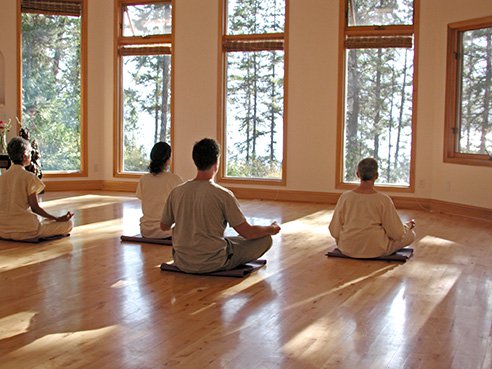
I remember the day that I did this interview. It was late August 2014 and I had just gotten back to Korea from Malaysia, where I had completed my first Vipassana meditation course. I joined my friend for a KOTESOL gathering at Mokpo National University. We did a quiet meditation on the beach in Mokpo City and over a chicken lunch on the hill, I asked her about meditation in Gwangju. These days, there has not been much active group meditation in the Gwangju international community, but it’s never too late to start again. Since then, I have also completed my second Vipassana meditation course, after which life became extremely busy. Someday I will get to that place where I can be in balance again. 

Originally published in the October 2014 Gwangju News magazine: http://gwangjunewsgic.com/community/gwangju-plays/monday-night-meditation/

Although far from the bustling Seoul metropolis, life in Gwangju can still be hectic and stressful. To help people remain calm and balanced amidst work, family and social life pressures, the Gwangju International Center is offering meditation sessions every Monday night at 7 pm.

Maria Lisak, professor at Chosun University’s Public Administration and Social Welfare department, leads the weekly English-language sitting and walking meditation.

“Monday night is a good night to start your week, get your perspective,” Lisak said. “Empty out on Monday nights.”

Lisak believes that people’s lives are out of balance and that meditation can “give energy, more balanced energy to whatever is out of whack. I find that people are too caught up in modern life. We say we’re so busy, but we’re really not that busy. Meditation makes us stop and just ‘be’ instead of ‘do.”

According to Lisak, meditation practice for Gwangju’s international community started around 2006, when former Gwangju resident and English teacher Jennie Lee Ulrich offered local sessions and organized temple stays at Musangsa Temple’s International Zen Center at Gyeryong Mountain near Daejeon. In 2010, former Gwangju National University of Education professor Ross Chambers began facilitating night sessions at the GIC and Lisak joined as co-facilitator in 2013.

Beyond these efforts, Lisak has seen a wide range of meditation services around the city.

“Everything from churches offering meditation to non-religious organizations, culture centers, temples and people who do art and meditation. Those are just things I’ve noticed. I’m looking with eyes that are noticing meditation.”

She hopes that meditation practice could be spread all over the Gwangju, including bringing it as a service for the workers in the various factories. Over time, Lisak has seen many different people attend the sessions.

“People come, people go. We have a lot of people who come and try it. They don’t have the time to commit. Maybe the only people I haven’t seen are factory workers. It doesn’t work with the time. Over the years, there have been kids at different events.”

Lisak says that sitting on a mat is not the only way to practice meditation.

“Prayer, sports, having a great game of tennis. Those people are pure in being in attendance. People should look at whatever gives you balance and peace, that’s meditation.”

While meditation can be practiced alone or in different forms, Lisak emphasizes the usefulness of group sessions.

“Getting together helps us improve our meditation. It helps us stay more present and more awake, for the space it’s in and the community at large.”

Besides the GIC Monday night meditation, Mugaksa temple in Sangmu residential district’s 5.18 Memorial Park currently offers English-language intro to Buddhism courses Sundays 10-11:30am and Korean-language sittings 2-4pm Saturdays and Sundays.

“Rumors” And Facts About The Gwangju Performance Project

Since writing this story, I have been lucky enough to participate in a community theater project and the Vagina Monologues here in Gwangju. The Gwangju Performance Project has come a long way, with many other successful plays and there are still many talented and active performers living and working in this city.

July 3, 2014

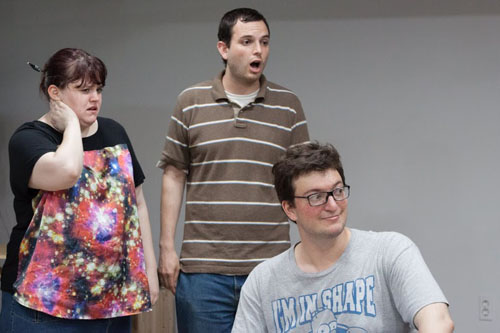
The Gwangju Performance Project, the local amateur performance troupe, is busy preparing this summer’s production of Rumors, a farcical play written by Neil Simon. According to GPP treasurer and cast member Joey Nunez describes, the story is “very line-driven” and “a conversational war between characters.”

The GPP was founded in 2011 by English teachers Travis Major and Jo Park, who have since left Korea. To get a sense of the play, and of the  Gwangju community theater, Gwangju News sat down with GPP staff and cast members.

Anna Volle, GPP’s president and director of Rumors, chose this year’s first performance in fall 2013, after the play Why Torture is Wrong and The People Who Love Them received a mixed response.

“The play itself was controversial and not all people who saw the show liked it,” Volle said. “Black humor is hard in any language and it doesn’t always cross borders. But I wanted the new play of the year to be something that everyone could enjoy, something that was light-hearted and fun.”

That’s exactly what “Rumors” is, says Lisa Mynhardt, vice-president of the GPP and the show’s stage manager. “A glimpse into the unbelievable life of the insane upper class, it will get more than a chuckle out of everyone.”

Heather Aitken, who serves as the play’s assistant director as well as GPP secretary, sees the GPP growing into a strong community project. “I want people to know that when we audition, it’s open to anyone in the community. We aren’t a clique. Anyone can be involved. GPP can facilitate joining together the Korean and the foreign communities through the performing arts.”

“I hope that people have a good night out with Rumors and that Koreans can get an insight into American culture.”

Rumors casts a Korean actress into a GPP production for the first time. Susie Choe is a Gwangju native and fourth-year Chonnam National University student. After performing in the Gwangju Vagina Monologues this past April, Choe auditioned for Rumors.

“I didn’t think I could do this, didn’t even think about taking the audition,” Choe said, “because I’m not a native speaker.”

Choe says that while being the only Korean is sometimes a challenge, it doesn’t hold her back fr.om participating. “I don’t feel uncomfortable being with foreigners. The thing I’m worried about the most is bothering other people because of my English ability, but the directors have been so generous to me, so I have no problem so far. And yes I think other Koreans also can get involved if they are willing to. If I can, everyone can! I’m enjoying it, and I just can’t wait to be on the stage!”

Since taking over as GPP president in March, Volle has seen the group expand beyond theater, incorporating a new choir, an emerging dance troupe and monthly theme-based performance workshops.

She cites the recent raffle fundraiser as a successful funding source. “It dramatically changes your options when you have some funding to set things in motion in the first place, being able to fund more larger and daring projects.”

Volle’s dream is for the GPP to become a full-scale Gwangju-based community program.“The Korean community could become involved in a more visible and active way. People who would like to get involved in dance and theater can go to a workshop and learn a little bit and maybe they try auditioning.”

The biggest ambition is making the Gwangju Performance Project an official non-profit organization in Korea. Secretary Nunez said this next step would garner more validity for the project and give more local groups a chance to partner with them.

“What we’re doing now is leaving footprints in the Gwangju community for residents who will be here 5, 10, 15, 20 years from now. Our future looks very bright!”

The Rumors performances are 7pm July 12, 3pm July 13, 2pm + 7pm July 19 and 3pm July 20, at the theater inside the Gwangju Foreign Language Network (GFN) building in Sajik Park. This will be the first performance with accompanying Korean subtitles. GPP membership is 10,000 won per year.

Original story:

“Rumors” And Facts About The Gwangju Performance Project

Korean Translation:
http://www.gjdream.com/v2/week/view.html?uid=457349&news_type=415&page=1&trackback=2

For more information, please visit: http://www.gwangjutheatre.com

Koryo Saram Center in Weolgok-dong, Gwangju


Since fall 2013, I had been volunteering English lessons at an after school center for North Korean kids. I found out that nearby, there was a center for Koryo Saram, or Koretsii in Russian. I’m embarrassed to say that even before doing this interview, I had very little background knowledge on this part of Russian/Korean history. Since then, I’ve met a few other Korean ethnic people from Uzbekistan and it’s certainly a growing returning group, a really special kind of international community. I still haven’t interacted much with the Koryo saram in Korea, but I’m glad I was able to learn about their story and be aware of their presence.

Koryo Saram Center

Original article published in Gwangju News May 2014 and in Gwangju Dream: http://gjdream.com/v2/week/view.html?news_type=415&uid=456163

For a deeper historical background on the Koryo saram, refer to this previous article: http://www.gwangjunewsgic.com/online/korea-in-the-world-uzbekistan/

Translated from Russian interview and written by Ana Traynin

Photos by GIC Volunteers Jo Ara and Catherina Takoh

Crossing the Youngsan river in the west of Gwangju means crossing into Gwangsan-gu, a fast-growing industry, agriculture and residential district. Home to the industrial complexes Hanam, Pyeongdong and Sochon, Gwangsan attracts a large number of international workers from African and Asian countries. Here, in the small but densely-populated Weolgok-dong neighborhood, a growing Russian-speaking Koryo saram diaspora community of nearly 2,000 people has taken root.

Since opening at the end of 2011, the Koryo Saram Center 고려인마을 in Weolgok-dong has seen an influx of ethnic Koreans from the former Soviet Union to Gwangju and has brought greater visibility to the community. On a Saturday afternoon, Gwangju News sat down around a table of ethnic snacks at the center to speak with leader Shin Jo Ya. Abuzz with weekend activities and the daycare’s move into a bigger space across the street, Shin told us her story.

Shin Jo Ya was born and spent most of her life in Uzbekistan’s capital Tashkent, in the ethnic Korean diaspora called “Koreytsi” in Russian. As with others, Shin grew up speaking only Russian and didn’t learn Korean. Her journey to her historic motherland began in October 2001, following on the heels of her daughter’s marriage to a Korean national and move to Seocheon, Chungcheonnamdo. After working around Seoul, Shin moved to Hampyeong and finally, found Gwangju’s Pyeongdong Industrial Complex.

It was there that she met a number of Russian-speaking workers from former Soviet countries, who introduced her to Korean pastor Lee Cheon Yeong. At that time, the pastor was running a church and cultural center for international workers on 8th street in Weolgok-dong. It was a fateful meeting, as Shin would come to follow Lee and work with him side-by-side as an international community leader. Shin credits Pastor Lee and working with Gwangsan’s foreign community as a life-giving force.

“I struggled, here and there,” Shin said. “In that country [Uzbekistan], I was only existing, just breathing and surviving. But here, I’ve come to know many other good things. When I saw that he [Pastor Lee] gave his all to help others, I saw that and if I was to follow the Gospel, I had to do the same. He helped us with everything. Whoever didn’t get paid, had nowhere to sleep or was sick, he did everything for them. That’s how I met him, began following him and came to have faith. I started going to church every Sunday and working with him. He was very glad to meet me, because I am also Korean, we are of the same blood. That is when I said, ‘From now on, I will never go anywhere else but Gwangju. I will never leave him.’”

Over time, many Mongolians, Russians and others from former Soviet republics like Uzbekistan and Kazakhstan started coming and Shin took on a greater role.

“He [Pastor Lee] said ‘Zoya, come help me work with foreigners or else I’ll end up in the hospital in two months.’ Working with foreigners takes a lot of nerves and patience. Some people aren’t fair, they earn money and they leave. He couldn’t pay me anything because it was all privately funded. I said ‘I still need to live, I still don’t have money.’ For two years I had to work, but from 2005 I was helping him full-time. And that’s how I gradually came to meet a North Korean on the same level as me, who fled that country, lived in Russia for 13 years and came to South Korea through the church. Same as me, a refugee, only our grandfathers came first. We were both alone. We started from nothing, but we decided to get married and started living better.”

Shin explains that Weolgok-dong’s close proximity to the industrial complexes, cheap housing and convenient bus routes has made the neighborhood a burgeoning foreign community. While before, there was an abundance of private houses, as more workers move in, apartments are springing up.

“So that’s how not only Russian speakers came, but also Vietnamese, Chinese, Thais, who doesn’t live here in Weolgok-dong? There may be more foreigners than locals here. On every corner, they are taking down the houses and the villas are growing like mushrooms. Foreigners who lived in private houses, they had to pay too much for heating in the winter. So they started moving into one-room villas.”

The rise in an international population has produced a greater need for services. Besides running thirteen independent international church services, Shin’s mentor Pastor Lee is the founder and principal of an alternative international school in far west Gwangsan-gu, Saenal School (New World School).

“First, he opened the Nepali church,” Shin said. “Then, I said ‘There is a Nepali pastor. Why can’t we have our own Koreyski church?’ All of my hard years, he helped me. So I said to him ‘why don’t we open a church in Weolgok-dong?’ So, we opened this Koryo Saram Center in at the end of 2011.”

During the interview, Shin received just one of many similar calls – a Koryo saram couple in Seoul had heard about the center and wanted to move to Gwangju. Shin said that although other centers in Korea have bigger spaces, the one in Weolgok-dong – with a nursery, kindergarten and church under one roof – is the first of its kind in the country.

“People from one nation live together,” Shin said. “If we didn’t have the center, Koreytsi wouldn’t have a place of their own. As soon as we opened our own separate center, many local Koreans started helping us. It was difficult to start it, but once we did, it started growing fast. Local Koreans started understanding who were, the Koreyski people. Each country had a different name for us. In China, we were Chosun saram and in Russia we were Koreytsi.”

Shin dreams to see the opening of one inclusive church in the future.

“My dream is that our pastor has one big international church, with different times for each nation’s service. Because God sent him to the foreign community. He fought and struggled to open his legally recognized international school, the New World School. So now we want to open a big church.”

As for the Koryo Saram community, Shin’s hopes are no smaller.

“I just want to be in good enough health to see the big church open and to see that our Koreyski people could get the F4 visa. That anyone who wants to work in a factory can work, that there is no oppression and that we are not sent away from this country because we have nowhere else to go. The language is not the biggest problem. There are 500,000 ethnic Koreans from China, while Koreytsi from the former Soviet nations are only 40,000. We want both people to have the rights.”

For more on the Koryo Saram Center, please visit: www.koreancoop.com

For more on Lee Cheon Yeong’s New World School, please visit: http://www.saenalschool.com

Gwangju’s Asia Culture Center : Ten Years in the Making

A few months before moving to Gwangju in late April 2013, I paid my first visit to this sixth largest metropolitan city, known as the birthplace of Korean democracy. At the time, and for the following 2 years, the “Blue Wall of Gwangju” was a bright and creative fixture in the middle of the city at the end of that famous street, Geumnam-ro, surrounding the former Jeollanamdo Provincial Hall and the iconic fountain where thousands gathered during the May 18th, 1980 Gwangju Uprising.

As I would soon learn, the Blue Wall, covered in citizens’ murals and children’s artwork and various graffiti, was actually the construction site of the upcoming Asia Culture Center, finally opened in November 2015. Less than a year into my Gwangju residence, I interviewed the man behind the ACC, Chung Dong-chae, for the March 2014 Gwangju News cover story. I learned new-to-me things about the vision of Gwangju that have gradually become a familiar drumbeat: human rights, peace, justice, traditional art, food, culture. I learned that Chung, along with many of the democratic activists and fired journalists under Chun Doo-hwan’s regime, especially those in Gwangju and Jeollanamdo, went into Korea’s political sphere, to raise up their hometown to something beyond what it had been.

The Asia Culture Center is one of the symbols of these development efforts. These days, the Blue Wall is long gone and in its place is a shining, immaculate piece of architecture with large exhibit and conference halls underground, as well as a grassy slope for public gathering aboveground and a clean pavement. The fountain and the Provincial Hall are still there, but banners in Korean and English abound, protesting the alleged erasure of 5.18 history. The ACC took a decade to built and it seems to have been fought, both for and against, every step of the way. Regardless of which side a Gwangju resident stands on, it’s clear that it’s not going anywhere anytime soon.

I feel nostalgic reading this story from three years ago, thinking how little I knew at the time and how much has changed here in Gwangju. How the Blue Wall would not exist without the ACC, and where has all that citizen art gone? I leave my Blue Wall photos here as a representative of my first impressions of Gwangju. I think about the past, present and future of this rugged, complicated, proud city that has become my home.

******

Originally published March 2014 in Gwangju News

Man of Culture: Chung Dong-chae and the East Asia Culture City Forum

It is a big year for Gwangju. The city has held the special status of Cultural Center City in Korea since 2003, but this spring kicks off the 2014 East Asian Cultural City forum, an eight-month celebration and intercultural exchange with two other designated cities – China’s Guanzhou and Japan’s Yokohama.

Signed by the culture ministers of China, Japan and South Korea, the 2012 Shanghai Action Plan represented an unprecedented commitment to overcoming historic regional conflicts in Northeast Asia through strengthening cultural ties. It laid the groundwork for this year’s first annual East Asian Cultural City trilateral exchange.

On September 28, 2013, Gwangju hosted the fifth ministerial conference between the three countries’ culture ministries, who officially nominated Guanzhou, Yokohama and Gwangju as 2014 East Asian Cultural Cities. Gwangju was among six Korean cities, including Busan, Daegu and Jeonju, judged by the culture panel to receive the designation.

On January 27, 2014, Gwangju News sat down with the East Asian Cultural City committee chairman Chung Dong-chae in his office at the Kim Dae-jung Convention Center. He highlighted the fortunate timing of this year’s event, which might build momentum for the opening of another landmark in downtown Gwangju.

“The East Asian Cultural City is important, but I consider it even more important because it can highlight the Asian Cultural City Complex which is opening in 2015,” Chung said. “Even though it wasn’t planned that way, it was a coincidence.”

A Gwangju native, Chung brings to his new role as committee chairman a strong commitment to the city. As the 2004-2006 Minister of Culture, Tourism and Sports, Chung invested in building the Culture Complex as part of the then-evolving Gwangju Cultural City Project.

Chung believes Gwangju is the right choice to be Korea’s East Asian Cultural City. According to him, Gwangju and the larger South Jeolla region are considered to have three characteristics: justice, art (in particular, traditional painting) and food. In addition, he mentions the designation of South Jeolla’s pansori theater as a UNESCO World Heritage item.

“Another characteristic of Gwangju is justice and human rights,” Chung said. “Whenever the nation was in peril, this place was active to save the nation. In the past, when in 1592, the Japanese invasion was here, the most famous admiral Mr. Lee said: ‘Without Jeolla Province, there is no hope.’ Then, under the Japanese occupation of the 20th century, the Gwangju Student Movement spread to the nation as a nationwide independence movement. We also had the Gwangju May Uprising against the military government.”

Beyond his contributions to Gwangju, Chung has played a significant role in revitalizing Korea’s cultural market and promoting mutual communication with neighboring countries.

“While working as minister, I focused on two things: cultural content and tourism development,” Chung said. “I was creating cultural content, including drama, animation, games. At the same time, I made Korea more strong in the world cultural market. I’m proud of that. I also began to develop tourism. Until then, the Korean tourism industry was poor, but I made it develop further.”

Chung’s progression into government service began with a journalism career at Yonhap News (formerly Hapdong News Agency) from the late 1970s. As a journalist under the military regime in 1980, Chung refused to be censored by the government and was removed from his job. “I was imprisoned and tortured as well. So after the transitional government, I was involved in the democratic movement.”

In 1988, Chung joined other fired and repressed journalists to form the Hankyoreh, Korea’s first independent, publicly-funded progressive newspaper. He stayed with the paper until 1993 before moving into politics.

“I was invited by Mr. Kim Dae-jung when he created the Asia Pacific Peace Foundation [in 1994], as a general secretary,” Chung said. “So it was the beginning of my political career.”

Chung served for 2 and a half years in the Asia Pacific Peace Foundation, until the start of Kim Dae-jung’s presidency. He would take up the general secretary position again under Kim’s successor Roh Moo-hyun, who while campaigning for the presidency invited Chung to rejoin the Asia Pacific Peace Foundation board. It was during this campaign that Chung proposed to Roh the idea of the Cultural City project.

“As secretary general under Mr. Roh’s candidacy, I proposed the special law,” Chung said. “As the Minister of Culture, I bought the real estate for the Culture Complex and the construction was initiated. I managed to establish a special law for [Gwangju as] the Cultural City, 2003-2023.”

Before joining the Ministry of Culture and working with President Roh, Chung was elected to the National Assembly in 1996 and was re-elected until he had served three consecutive terms in 2008. “As an Assemblyman, I always was on the committee of Culture and Tourism. That’s why I began to have a lot of interest in culture and tourism so as minister, I implemented what I wanted to do before.”

Chung’s new role as committee chairman is a full-time job. “The East Asian Cultural City was designated in the previous government. In the process of the status of Gwangju to be designated as an Asian Cultural City as well as East Asian cultural City, I was invited to be involved. Now, after the designation, I am working the whole year.”

While Guanzhou and Yokohama’s opening ceremonies were set for February 13 and February 25 respectively, Gwangju will kick off the East Asian Cultural City celebration on March 17.

“In the opening ceremony, Chinese and Japanese performers will be invited and of course we will send our performers to China and Japan,” Chung said. “Forty members of the performance group will come and we will also send forty. People who come to the opening ceremony will enjoy the artwork from China and Japan. The closing ceremonies will take place in October in three countries. There will be a variety of events during this year in all three cities.”

Besides additional smaller events, Chung explained that the 2014 East Asian Cultural City forum will build on three of Gwangju’s most popular annual festivals. “The World Music Festival has included many different countries, but now this time we want to focus on China and Japan. We will have an extended Arirang festival and the Chungjang-ro festival will have performers from China and Japan as well. That festival has been designated by the national government. The central government is also advising the existing festival to be more East Asian.”

Since the announcement of the 2014 East Asian Cultural Cities, Chung has seen cross-cultural interest grow, with Korea showing more interest in Chinese and Japanese culture and China and Japan expressing a growing appreciation for what Gwangju has to offer. “After the designation, the interest of Gwangju city has grown, both in China and Japan. The mass media began to show interest in Gwangju.”

In 2007, the ministers of the three major East Asian countries launched annual ministerial conferences to focus on building what China’s Minister of Culture Cai Wu has called a “shared East Asia value” that could bring better cooperation and stability to the region. The Shanghai Action plan was signed in the year that marked the 40th anniversary of normalized China-Japan diplomatic relations and the 20th anniversary of China-South Korea diplomacy. The next minister trilateral meeting takes place in Yokohama in September 2014. Through 2017, each country will continue annually selecting a representative East Asian Cultural City.

“Two years ago, we decided to do it with the Shanghai Action Plan, but this is the first year we are doing it and it will continue,” Chung said. “The Cultural City Project will continue, more cities will be invited to join. Through this project, I hope that more cultural understanding will be created with other countries, and a promotion of understanding that will help the conflict.”

Original story: http://gwangjunewsgic.com/features/man-of-culture-chung-dong-chae-and-the-east-asia-culture-city-forum/