April 16, 2014 – April 16, 2020

Everyone who was here probably has some memory of that day. It was a Wednesday. I know because our high school had switched out the Friday for the 4.19 memorial one-day field trip. It was going to rain on Friday, April 18 so we went on Wednesday, April 16. I was with the second graders, incidentally the same age, hiking up and down Damyang’s Geumseongsanseong Fortress trails, where the students did a funny and moving outdoor theater performance depicting the 4.19 Uprising of 1960 that drove Syngman Rhee from power. It was exactly the kind of spring day that made you believe in revolution and hope, the spring season of life. I walked and talked with my students among the jindallae and all the other natural sights inside the fortress walls. I had been at the school just a few days shy of 1 year, so maybe I missed any pained looks on the faces of the teachers. Maybe some of them knew, even up there. I never asked. It wasn’t until we came back to the entrance of the school in the early evening that my friend and co-worker ran up to me, frantically saying “There’s been an accident. A ferry has sunk.”

Over the next few days, we lived in a state of disbelief, as the surreal truth spread around us like the waves off the Jeju Coast: 304 people were still in the ferry, and they would never return to land. I taught classes as normal. I even smiled and laughed. But within one week, it became that after just over two years in Korea, I was witnessing my first public tragedy in my new adopted country. The TV news became a steady body count. The rage of the Danwon High School families rose, as they went from sleepless days and nights in the Jindo auditorium, to marches and gatherings across the country. Yellow ribbons fluttered everywhere. We went to Paengmokhang in Jindo. Students left the memorial altar in uncontrollable tears at the knowledge that these were their “friends,” of the same age. We gathered at neighborhood vigils. Demonstrations continued non-stop. The trial of the captain happened in Gwangju where I lived. The Diving Bell documentary was censored at the Busan Film Festival. Park Geun-hye was eventually taken down. Other tragedies took place.

Those six years have flown by and though it was so real for so much of the time, the details of all the rallies and the political upheaval have become blurry for those of us no longer directly involved. Yet I can say without a doubt that the Sewol ferry sinking changed my life forever. As an outsider and a bystander, it taught me about collective grief, solidarity, activism, resilience, and most importantly, the elusive feeling of empathy. I realized that empathy, the ability to feel another’s pain, is how we retain our humanity. When we lose empathy, we lose everything. When I wonder about the starting point of empathy, for me at least, I don’t think it starts from the cacophony of collective pain and struggle, the cries, the protests, the hunger strikes. I can’t quite find it in the numbers of bodies as they rise, counted daily on the TV screens. For a while, I even feel numb seeing the faces of the survivors in their suffering, even while meeting the families face to face. It all felt like nothing but performative mourning, the thing I had to do, as a social activist, whatever it is I was trying to be. The starting point, the breaking of the barrier, was realizing it could be me too. The moment I could imagine the coldness of the water, imagine seeing my classmates and others walking safely to shore from inside the ferry, and knowing that this was the end. Imagining the loneliness of that senseless death and how fast and early it came for hundreds of teenagers. Death is lonely. From that moment, I could count the numbers. About the size of the whole high school where I worked. Suddenly I could imagine all those voices suddenly go silent, an empty cafeteria, classrooms, hallways, the yard. A complete emptiness. That’s when I understood. That’s when I could look the families in the eyes and allow them every single step of their struggle, everything they still deserve and haven’t gotten. While other memories fade, it’s the ability to feel empathy that I always fight to remember.

Now we’re living through a worldwide public health crisis. It’s another cycle of politics and pointing fingers and shouting for change, and rightfully so. But that’s not the starting point. Once again, I feel it’s about empathy. About imagining that lonely death. It could be any of us. It’s OK to feel that, the terrible weight of it. It means we are still alive. And we must fight like hell for it.
         

Monday Night Meditation: Gwangju 2014

I remember the day that I did this interview. It was late August 2014 and I had just gotten back to Korea from Malaysia, where I had completed my first Vipassana meditation course. I joined my friend for a KOTESOL gathering at Mokpo National University. We did a quiet meditation on the beach in Mokpo City and over a chicken lunch on the hill, I asked her about meditation in Gwangju. These days, there has not been much active group meditation in the Gwangju international community, but it’s never too late to start again. Since then, I have also completed my second Vipassana meditation course, after which life became extremely busy. Someday I will get to that place where I can be in balance again. 

Originally published in the October 2014 Gwangju News magazine: http://gwangjunewsgic.com/community/gwangju-plays/monday-night-meditation/

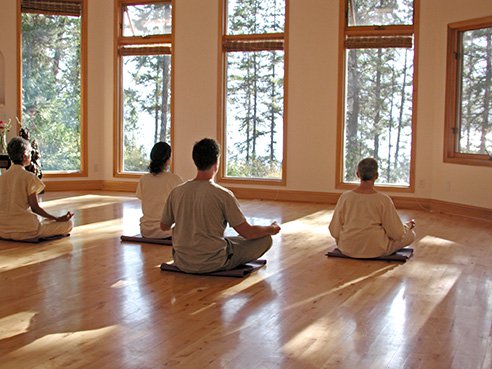
Although far from the bustling Seoul metropolis, life in Gwangju can still be hectic and stressful. To help people remain calm and balanced amidst work, family and social life pressures, the Gwangju International Center is offering meditation sessions every Monday night at 7 pm.

Maria Lisak, professor at Chosun University’s Public Administration and Social Welfare department, leads the weekly English-language sitting and walking meditation.

“Monday night is a good night to start your week, get your perspective,” Lisak said. “Empty out on Monday nights.”

Lisak believes that people’s lives are out of balance and that meditation can “give energy, more balanced energy to whatever is out of whack. I find that people are too caught up in modern life. We say we’re so busy, but we’re really not that busy. Meditation makes us stop and just ‘be’ instead of ‘do.”

According to Lisak, meditation practice for Gwangju’s international community started around 2006, when former Gwangju resident and English teacher Jennie Lee Ulrich offered local sessions and organized temple stays at Musangsa Temple’s International Zen Center at Gyeryong Mountain near Daejeon. In 2010, former Gwangju National University of Education professor Ross Chambers began facilitating night sessions at the GIC and Lisak joined as co-facilitator in 2013.

Beyond these efforts, Lisak has seen a wide range of meditation services around the city.

“Everything from churches offering meditation to non-religious organizations, culture centers, temples and people who do art and meditation. Those are just things I’ve noticed. I’m looking with eyes that are noticing meditation.”

She hopes that meditation practice could be spread all over the Gwangju, including bringing it as a service for the workers in the various factories. Over time, Lisak has seen many different people attend the sessions.

“People come, people go. We have a lot of people who come and try it. They don’t have the time to commit. Maybe the only people I haven’t seen are factory workers. It doesn’t work with the time. Over the years, there have been kids at different events.”

Lisak says that sitting on a mat is not the only way to practice meditation.

“Prayer, sports, having a great game of tennis. Those people are pure in being in attendance. People should look at whatever gives you balance and peace, that’s meditation.”

While meditation can be practiced alone or in different forms, Lisak emphasizes the usefulness of group sessions.

“Getting together helps us improve our meditation. It helps us stay more present and more awake, for the space it’s in and the community at large.”

Besides the GIC Monday night meditation, Mugaksa temple in Sangmu residential district’s 5.18 Memorial Park currently offers English-language intro to Buddhism courses Sundays 10-11:30am and Korean-language sittings 2-4pm Saturdays and Sundays.

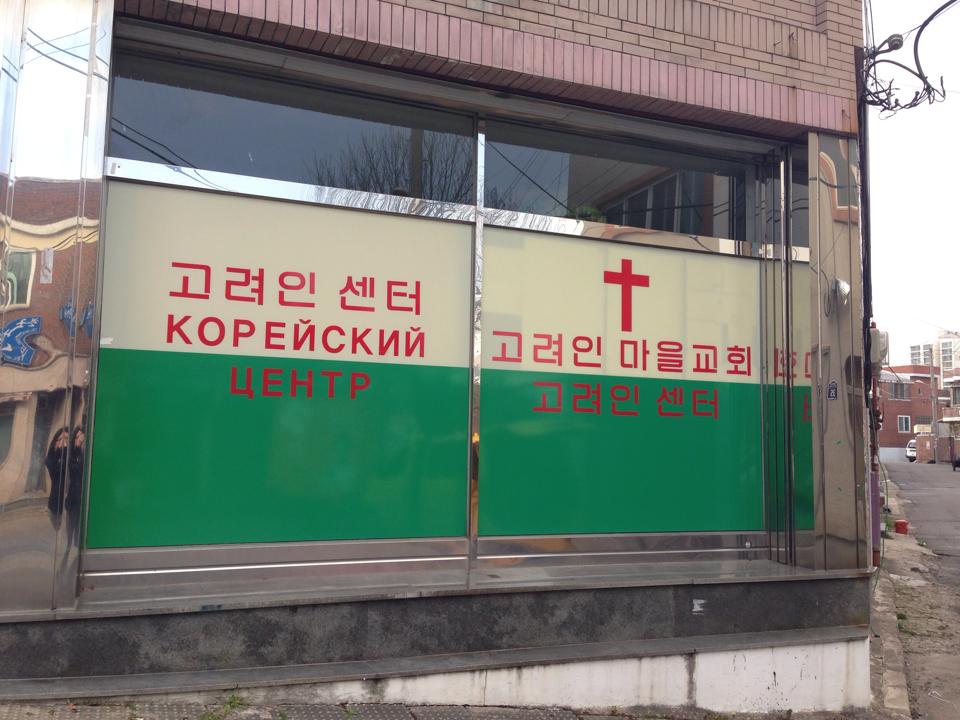
Koryo Saram Center in Weolgok-dong, Gwangju


Since fall 2013, I had been volunteering English lessons at an after school center for North Korean kids. I found out that nearby, there was a center for Koryo Saram, or Koretsii in Russian. I’m embarrassed to say that even before doing this interview, I had very little background knowledge on this part of Russian/Korean history. Since then, I’ve met a few other Korean ethnic people from Uzbekistan and it’s certainly a growing returning group, a really special kind of international community. I still haven’t interacted much with the Koryo saram in Korea, but I’m glad I was able to learn about their story and be aware of their presence.

Koryo Saram Center

Original article published in Gwangju News May 2014 and in Gwangju Dream: http://gjdream.com/v2/week/view.html?news_type=415&uid=456163

For a deeper historical background on the Koryo saram, refer to this previous article: http://www.gwangjunewsgic.com/online/korea-in-the-world-uzbekistan/

Translated from Russian interview and written by Ana Traynin

Photos by GIC Volunteers Jo Ara and Catherina Takoh

Crossing the Youngsan river in the west of Gwangju means crossing into Gwangsan-gu, a fast-growing industry, agriculture and residential district. Home to the industrial complexes Hanam, Pyeongdong and Sochon, Gwangsan attracts a large number of international workers from African and Asian countries. Here, in the small but densely-populated Weolgok-dong neighborhood, a growing Russian-speaking Koryo saram diaspora community of nearly 2,000 people has taken root.

Since opening at the end of 2011, the Koryo Saram Center 고려인마을 in Weolgok-dong has seen an influx of ethnic Koreans from the former Soviet Union to Gwangju and has brought greater visibility to the community. On a Saturday afternoon, Gwangju News sat down around a table of ethnic snacks at the center to speak with leader Shin Jo Ya. Abuzz with weekend activities and the daycare’s move into a bigger space across the street, Shin told us her story.

Shin Jo Ya was born and spent most of her life in Uzbekistan’s capital Tashkent, in the ethnic Korean diaspora called “Koreytsi” in Russian. As with others, Shin grew up speaking only Russian and didn’t learn Korean. Her journey to her historic motherland began in October 2001, following on the heels of her daughter’s marriage to a Korean national and move to Seocheon, Chungcheonnamdo. After working around Seoul, Shin moved to Hampyeong and finally, found Gwangju’s Pyeongdong Industrial Complex.

It was there that she met a number of Russian-speaking workers from former Soviet countries, who introduced her to Korean pastor Lee Cheon Yeong. At that time, the pastor was running a church and cultural center for international workers on 8th street in Weolgok-dong. It was a fateful meeting, as Shin would come to follow Lee and work with him side-by-side as an international community leader. Shin credits Pastor Lee and working with Gwangsan’s foreign community as a life-giving force.

“I struggled, here and there,” Shin said. “In that country [Uzbekistan], I was only existing, just breathing and surviving. But here, I’ve come to know many other good things. When I saw that he [Pastor Lee] gave his all to help others, I saw that and if I was to follow the Gospel, I had to do the same. He helped us with everything. Whoever didn’t get paid, had nowhere to sleep or was sick, he did everything for them. That’s how I met him, began following him and came to have faith. I started going to church every Sunday and working with him. He was very glad to meet me, because I am also Korean, we are of the same blood. That is when I said, ‘From now on, I will never go anywhere else but Gwangju. I will never leave him.’”

Over time, many Mongolians, Russians and others from former Soviet republics like Uzbekistan and Kazakhstan started coming and Shin took on a greater role.

“He [Pastor Lee] said ‘Zoya, come help me work with foreigners or else I’ll end up in the hospital in two months.’ Working with foreigners takes a lot of nerves and patience. Some people aren’t fair, they earn money and they leave. He couldn’t pay me anything because it was all privately funded. I said ‘I still need to live, I still don’t have money.’ For two years I had to work, but from 2005 I was helping him full-time. And that’s how I gradually came to meet a North Korean on the same level as me, who fled that country, lived in Russia for 13 years and came to South Korea through the church. Same as me, a refugee, only our grandfathers came first. We were both alone. We started from nothing, but we decided to get married and started living better.”

Shin explains that Weolgok-dong’s close proximity to the industrial complexes, cheap housing and convenient bus routes has made the neighborhood a burgeoning foreign community. While before, there was an abundance of private houses, as more workers move in, apartments are springing up.

“So that’s how not only Russian speakers came, but also Vietnamese, Chinese, Thais, who doesn’t live here in Weolgok-dong? There may be more foreigners than locals here. On every corner, they are taking down the houses and the villas are growing like mushrooms. Foreigners who lived in private houses, they had to pay too much for heating in the winter. So they started moving into one-room villas.”

The rise in an international population has produced a greater need for services. Besides running thirteen independent international church services, Shin’s mentor Pastor Lee is the founder and principal of an alternative international school in far west Gwangsan-gu, Saenal School (New World School).

“First, he opened the Nepali church,” Shin said. “Then, I said ‘There is a Nepali pastor. Why can’t we have our own Koreyski church?’ All of my hard years, he helped me. So I said to him ‘why don’t we open a church in Weolgok-dong?’ So, we opened this Koryo Saram Center in at the end of 2011.”

During the interview, Shin received just one of many similar calls – a Koryo saram couple in Seoul had heard about the center and wanted to move to Gwangju. Shin said that although other centers in Korea have bigger spaces, the one in Weolgok-dong – with a nursery, kindergarten and church under one roof – is the first of its kind in the country.

“People from one nation live together,” Shin said. “If we didn’t have the center, Koreytsi wouldn’t have a place of their own. As soon as we opened our own separate center, many local Koreans started helping us. It was difficult to start it, but once we did, it started growing fast. Local Koreans started understanding who were, the Koreyski people. Each country had a different name for us. In China, we were Chosun saram and in Russia we were Koreytsi.”

Shin dreams to see the opening of one inclusive church in the future.

“My dream is that our pastor has one big international church, with different times for each nation’s service. Because God sent him to the foreign community. He fought and struggled to open his legally recognized international school, the New World School. So now we want to open a big church.”

As for the Koryo Saram community, Shin’s hopes are no smaller.

“I just want to be in good enough health to see the big church open and to see that our Koreyski people could get the F4 visa. That anyone who wants to work in a factory can work, that there is no oppression and that we are not sent away from this country because we have nowhere else to go. The language is not the biggest problem. There are 500,000 ethnic Koreans from China, while Koreytsi from the former Soviet nations are only 40,000. We want both people to have the rights.”

For more on the Koryo Saram Center, please visit: www.koreancoop.com

For more on Lee Cheon Yeong’s New World School, please visit: http://www.saenalschool.com